

MIETTA FOUNDATION SONG SERIES #2
The Open Road
_edited.png)
FRI 23 OCT
MELBOURNE RECITAL CENTRE
Mietta Foundation Song Series
ACOCO Presents
THE OPEN ROAD
CONCERT #2
DATE
Friday October 23
TIME
7pm - 9pm
PLACE
The Primrose Potter Salon
Melbourne Recital Centre
Pairing Ralph Vaughan Williams/R.L. Stevenson's beloved Songs of Travel with the Australian premiere of Kate Moore/Walt Whitman’s The Open Road.
Scottish poet and novelist Robert Louis Stevenson’s Songs of Travel follow a restless journey through open landscapes; a searching reflection on freedom, solitude, memory and the elusive meaning of home. American poet and essayist Walt Whitman’s The Open Road is a call to step beyond society’s constraints in pursuit of freedom and self-discovery.
Together, through English music of the 20th century, and Australian music of the 21st century, these equally entrancing works invite us to consider what it means to leave, to journey, to seek - and to find beauty in the road itself.
The Open Road
Australian premiere
music Kate Moore
words Walt Whitman
Margaret Trubiano mezzo soprano
Tijana Kozarcic harp
Mat Jodrell flugelhorn / trumpet
Coady Green keyboard
Songs of Travel
music Ralph Vaughan Williams
words R. L. Stevenson
Sangmi Kim pianist
Darcy Carroll baritone
Genevieve Gray soprano
Sophie Bisset soprano
Alexandra Amerides contralto
Callum McGing tenor
The Open Road

Margaret
Trubiano
Hailed as 'stunning' by the New York Times, American mezzo-soprano Margaret Trubiano graduated with Bachelor’s and Master’s Degrees from Manhattan School of Music. For Victorian Opera, Margaret has performed Ottavia, Poppea and Beggar Woman Sweeney Todd. Opera Australia credits include Mercedes Carmen, Princess Clarissa Love For Three Oranges.
Other operatic appearances include Maddalena Rigoletto (DiCapo Opera NYC), Kate The Pirates of Penzance & 3rd Lady The Magic Flute (New Jersey Opera), Second Fairy Midsummer Night's Dream (NYC Ballet), Second Witch Dido & Aeneas (Macau Opera). She performed Mrs. Grose in Turn of the Screw at the Hayes Theatre and played to sold out crowds in her ‘NY Girl’ cabaret at Claire’s Kitchen & Kurt Weill’s Sins & Mahagonny at the Old Fitzroy Theatre.
A versatile performer, she covered Madame Giry in The Phantom of the Opera World Tour, played the title role in The Mystery of Edwin Drood, Baker’s Wife Into the Woods & performed Off- Broadway in Beautiful Girls. Concert appearances include Carnegie Hall, Gonzales’ Missa Azteca, Zurich Opernhause's Opera Gala, The Australian Ballet’s Stabat Mater, Duruflé’s Requiem with the New Jersey Summit Music Festival, The Ugly Duckling
at Caramoor Music Festival and Vivaldi's Gloria at the Phoenicia International Festival.
The Open Road

Kate
Moore
Kate Moore (born 1979) is an Australian composer currently based in the Netherlands. Moore has studied with Australian composers Larry Sitsky, Jim Cotter, and Michael Smetanin; Dutch composers Louis Andriessen, Martijn Padding, Diderik Wagenaar and Gilius van Bergeijk, and attended summer schools including Bang on a Can hosted by david lang, Julia Wolfe and Michael Gordon and Tanglewood hosted by John Harbison, Michael Gandolfi and Helen Grime.
In 2022 Moore was awarded the Gieskes-Strijbis Podiumprijs. In June 2017, Moore became the first woman to win the Matthijs Vermeulen Award from the Netherlands Funds for the Performing Arts FPK for her work The Dam, in its version for British ensemble Icebreaker
The Open Road
Composer Note:
In 2008 The Open Road was commissioned by the Korzo Theater in the Netherlands.
It is a song cycle of fourteen pieces adapting lyrics from a set of poems by Walt Whitman under the title Song of the Open Road. Song, the depiction of poetry, chant or other forms of communication through melody, is the most rudimentary form of musical expression, coming straight from the soul. Having the ability to directly reflect the inner shape, dimension and state of a person, it is a language perhaps more effective than any other form of communication to instigate empathy between people in common experience.
My question as a composer and as a person is what song do I sing? From where does my song originate, where is it going and where will it end? With this song cycle my aim is to discover the essence of my musical language, a form of ‘tabularasa’, clearing the slate to begin a journey of self-discovery. The songs are simple, self- contained statements, each with an individual character with an overall thread through which the entire cycle is connected. The musical material is economical, using minimal resources to portray an idea relying on nothing but the necessary.
Whitman’s poem Song of the Open Road resonated with me. What I found in the poems was a voice encouraging the reader to close the books, to step out, keeping the load light, to find one’s own feet on a journey into the soul in search of Truth, one’s origin and one’s identity.
“Open” suggests that the road has no destination and no finality. “Road” is a metaphor for an ongoing development, physical movement with forward propulsion. “Road” also suggests a well-beaten path that has been tried and tested by countless wayfarers. Therefore “The Open Road” indicates a connection with the ongoing eternal continuity of emerging lives.
There are three reasons why these poems struck me. On one level the poems portray a physical journey where a traveller away from home lives as a restless immigrant in other places. On a metaphysical level the open road indicates a development of the soul reaching beyond worldly expectations in search of reason. The third layer affirms the progression of a maturing artistic voice that becomes confident to sing its own song.
- Kate Moore, 2013
Songs of Travel
Ralph
Vaughan
Williams
Ralph Vaughan Williams (1872-1958) was the embodiment of model UK musical citizenship - a composition style that favoured Romanticism, and a philosophy that leaned heavily on national identity. Robert Louis Stevenson’s Songs of Travel and Other Verses' peripatetic poetry deeply resonated with Vaughan Williams' own quest to forge a fresh, unpretentious, and distinctly English compositional identity.
At the time of composition, Vaughan Williams composer was trying to break away from the sentimental and stale clichés of the Edwardian Victorian parlor song.
Stevenson's verses about a resolute, world-weary wayfarer moving through the natural landscape matched Vaughan Williams' own love for walking tours, cycling, and absorbing the atmosphere of the English countryside.


Margaret Trubiano
mezzo soprano

Tijana Kovarcic
harp

Mat Rodrell
flugelhorn / trumpet

Coady Green
keyboard

Darcy Carroll
baritone

Sophie Bisset
soprano
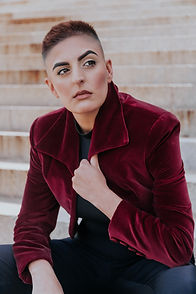
Alexandra Amerides
contralto

Callum McGing
tenor

Sangmi Kim
piano
READ the words:
Robert Louis Stevenson
1850 - 1894
Scottish poet, novelist and travel writer
Walt Whitman
1819 - 1892
American poet, journalist and essayist
2026 Song Series Supported by
