SUNDAY 13 SEPTEMBER
david lang
ACOCO X ANNA SCHWARTZ PROJECTS PRESENTS

the music of
david lang
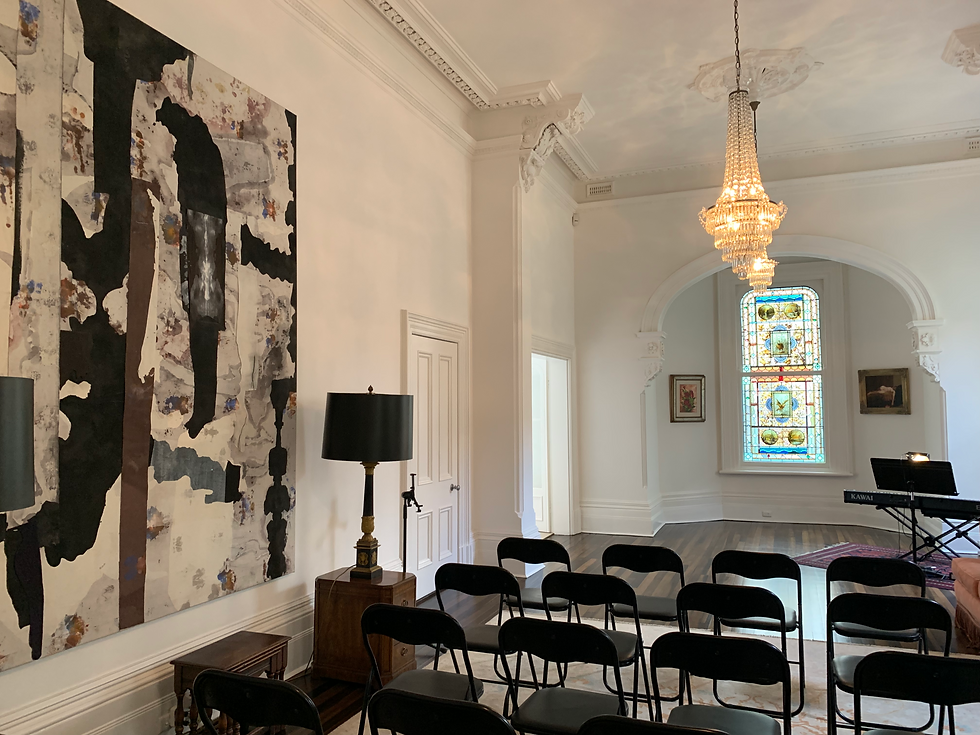
with exhibition of works by Jenny Watson
WHEN
5pm----7pm
Sunday 13 September 2026
WHERE
185 Flinders Lane, Melbourne
WHAT
60 minute concert
Exhibition & refreshments included
WHO
Jessica Aszodi soprano
Sophie Bisset soprano
Amanda Hargreaves soprano
Alexandra Amerides contralto
Genevieve Gray* soprano
Marianne Rothschild violin
Phoebe Green viola
Paul Zabrowarny cello
Stephen Rando electric guitar
Coady Green keyboard
*2026 ACOCO X Gertrude Johnson Fellow
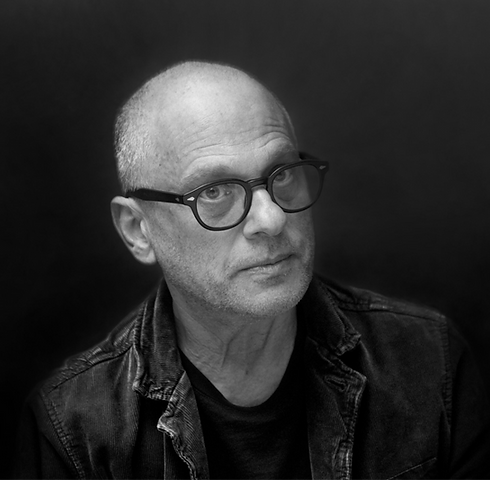
david lang
“With his winning of the Pulitzer Prize for the little match girl passion (one of the most original and moving scores of recent years), Lang, once a postminimalist enfant terrible, has solidified his standing as an American master.”
— The New Yorker
david lang [sic] is one of the most highly esteemed and performed American composers writing today. Co-founder of the BANG ON A CAN collective in New York, david lang has helped redefine how new music is created, presented, and received, often dissolving boundaries between concert, gallery and theatre spaces.
Lang’s the little match girl passion, commissioned by Carnegie Hall and premiered by Paul Hillier and Theatre of Voices, was recently listed by The Guardian as “one of the top 25 works of classical music written in the 21st Century.”
It won the Pulitzer Prize in 2008 and the recording received a Grammy Award in 2010. simple song #3, written as part of his score for Paolo Sorrentino’s acclaimed film YOUTH, received many awards nominations in 2016, including the Academy Award and Golden Globe.
His opera prisoner of the state (with libretto by Lang) was co-commissioned by the New York Philharmonic, Rotterdam’s De Doelen Concert Hall, London’s Barbican Centre, Barcelona’s l’Auditori, Bochum Symphony Orchestra, and Bruges’s Concertgebouw, and premiered June 2019 in New York (conducted by Jaap van Zweden). prisoner of the state received its UK premiere in January 2020 with the BBC Symphony (conducted by Ilan Volkov) and its EU premiere in May 2023 with the Bochum Sinfoniker (conducted by Steven Sloane).
david lang is a Professor of Music Composition at the Yale School of Music. He is co-founder and co-artistic director of New York’s legendary music collective Bang on a Can.
His music is published by Red Poppy Music and G. Ricordi & Co., New York (ASCAP) and is is distributed worldwide by the Universal Music Publishing Group.
>> READ MORE
Program
curated by Linda Thompson
just*
after song of songs (sop, perc/keyboard, viola, cello) 13'
Composer notes:
just (after song of songs) is a setting of a text I made by finding certain things in the Song of Songs. The original text is of course the most passionate and erotic of the ancient Jewish books, and it is always strange to encounter it in the Bible. In 2008 I wrote a choral piece called for love is strong, in which I made a similar text from the Song of Songs, trying to use the words to see through the relationship between the man and the woman in the story to the relationship between Man and God. According to Jewish tradition the Song of Songs is a metaphor for our passion for the Eternal, so the words themselves become very important. One thing that has always interested me about the text is that the man and the woman in the Song of Songs have attributes, they notice things about each other, they own things, they have features that are desirable. In a love between people this would be no surprise. In a love between Man and God, however, that might mean that in this text are clues to the nature of God’s own attributes, and a record of how they might attract us. For my text I listed everything personal or owned that is attributed to the man and to the woman. To clarify who is speaking I started every phrase of his with ‘just your’ and every phrase of hers with ‘and my.’ It is interesting that in a text about a love that is shared there are only seven instances of ‘our.’
let me come in*
after song of songs (sop, viola, cello, perc/keyboard) 10'
composer notes:
let me come in is part of a series of pieces I have been writing over the past several years, in which I have applied different literary filters to the text of the biblical ‘Song of Songs.’ The idea behind this series is that if we look at the text from many different angles it may eventually begin to reveal more of its emotional and spiritual powers. Or at least that is the hope. For this song, I started with one verse in the King James version of the text, where the woman is awaiting the knock of her lover on her door. 5:2 I sleep, but my heart waketh: it is the voice of my beloved that knocketh, saying, open to me, my sister, my love, my dove, my undefiled: for my head is filled with dew, and my locks with the drops of the night I love the sense of waiting for something beautiful to happen, the anticipation of the moment, and also I love that the narrator hasn’t moved to open the door yet – the sensuousness of the waiting is more powerful for her, and for us, than the actual physicality of meeting. Of course, these texts were originally in Hebrew, then translated and mistranslated into Greek and Latin and eventually English, and their various translations have changed the details of their various meanings. Many of these are intentional mistranslations; different Christian denominations, for example, have their own shaded versions of the text, in an attempt to lower the temperature of the original, to tone down its sensuality, or to make it seem more like a metaphor, or like a dream. I took 17 different versions of this verse, each slightly different, and then I alphabetized their phrases and got rid of all the duplicated lines, in order to make one single text, with all its interpretive angles shown.
simple song #3
from soundtrack of Youth (sop, violin, cello, keyboard) 6'
composer notes:
In ‘Youth’ Paolo Sorrentino had the great idea to make a movie about a composer, who is played in the film by Michael Caine. Paolo and I spent a lot of time talking about what the music in the film could mean. It became clear to me that Paolo needed the music to be the doorway into the emotional life of the character, that we would learn different things about the character from his music than from his words. It is a beautiful trope of the film that the composer would use words to communicate with other people but would use music to communicate with himself. ‘Simple Song #3’ is a communication across a very long distance, the entire creative life of the composer. Paolo needed the song to explore both ends of this communication -the young man who wrote it, when he was full of optimism and love, and the older man, whose life and love have changed. I thought of the song as a kind of time capsule, something to help us measure the distance all our lives must travel, on our way to age, from youth.
death speaks*
(sop, vln, egtr, keyboard) 26'
Something that has always interested me about the little match girl story is that the place where we are left emotionally at the end is so far away from where the match girl is. We are all weeping at the end and yet she is happily transfigured, in the welcoming arms of her grandmother in heaven. The original story switches starkly back and forth at the end, between her state and ours, perhaps in order to show us just how far away from redemption we are; it is Andersen’s way of making us feel left behind. This reminded me of certain other stark comparisons between the living and the dead. I remembered the structure of Schubert’s beautiful song “Death and the Maiden” in which the text is divided in half; the first half of the song is in the voice of the young girl, begging Death to pass her by, and the second half of the song is Death’s calming answer. This seemed to be the same division as in the Andersen story — the fear of the living opposed against the restfulness of death. What makes the Schubert interesting is that Death is personified. It isn’t a state of being or a place or a metaphor, but a person, a character in a drama who can tell us in our own language what to expect in the World to Come. Schubert has a lot of songs with texts like these — I wondered if I assembled all of the instances of Death speaking directly to us then maybe a fuller portrait of his character might emerge. Most of these texts are melodramatic, hyper-romantic and over-emotional; one of the knocks on Schubert is that he often saved his best music for the worst poetry. Nevertheless, I felt that taking these overwrought comments by Death at face value just might lead me someplace worth going. I went alphabetically in the German through every single Schubert song text (thank you, internet!) and compiled every instance of when the dead send a message to the living. Some of these are obvious and some are more speculative — Death is a named character in “Der Erlkönig,” the brook at the end of Die Schöne Müllerin speaks in Death’s name when it talks the miller into killing himself, the hurdy gurdy player at the end of Winterreise has long been interpreted as a stand-in for Death. All told, I have used excerpts from 32 songs, translating them very roughly and trimming them, in the same way that I adjusted the Bach texts in the little match girl passion.
I lie
Text (Yiddish) by Joseph Rolnick (SSA) 5'
I chose this particular text because it has a darkly expectant feeling about it. It isn’t about being happy or sad or miserable or redeemed; rather, it is about waiting for happiness or sadness or misery or redemption. As is the case in many Yiddish songs, something as ordinary as a girl waiting for her lover can cast many darker, more deeply beautiful shadows.
pay me now*
(sop, cello, bass) 3'
the outing
(contralto) 2'
*Australian premiere


Collaborator:
Anna Schwartz Projects
After more than four decades exhibiting and representing Australian and international artists, the seminal gallery has developed a new iteration as a project and practice. Located on the first floor of the DCM gallery conversion of the 1930's building in Flinders Lane, Anna Schwartz Projects continues its uncompromised conceptual position and contribution to culture with a programme including installation, performance, talk, publishing and music.
Anna Schwartz Projects works wth collections and facilitates commissions, continuing to present artists' exhibitions and facilitate sales, advice and visibility, collaborations with other galleries and institutions in supporting their practices.
If you're interested in hosting an ACOCO performance in your home, gallery or workspace - or, anywhere else - call us on 0487 411 398 to discuss.